A print workflow is the structured sequence of processes that move a printing job from an on-screen file to a finished printed product, including data intake, file validation, colour management, raster image processing (RIP), press control, finishing coordination, and production reporting. In production environments, workflow governs how information is translated into consistent physical output at production scale.
What are the steps of a Production Print Workflow?
In production-scale digital printing, workflow extends through pre-press, printing, finishing, and logistics management into a coordinated “glass-to-paper” system that standardises how jobs are processed and executed.
The workflow begins when a client submits artwork, typically as a PDF/X file. From there, standard preflight checks automatically setting up substrate profiles, ICC colours aligned with Pantone Matching, ISO, or whatever the preferred standard is must be setup by the operator or in more advanced systems automated for more digital printing agility to maintain consistent output across substrates and devices.
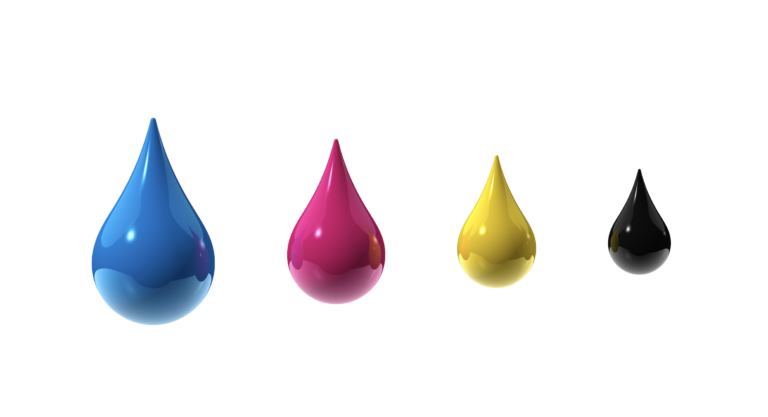
Job intent is then communicated between software and hardware, again, either input manually by the press operator, or can be encoded directly in the job files using JDF and JMF data containing printing parameters such as layout, substrate selection, and finishing requirements to move between systems without manual re-entry. The digital press then uses raster image processing (RIP) to convert the image in the design file into a printable bitmap, a grid layout defining where the millions of ink droplets must be placed during printing to create the final design.
How Are Workflows Different Between Printing Jobs?
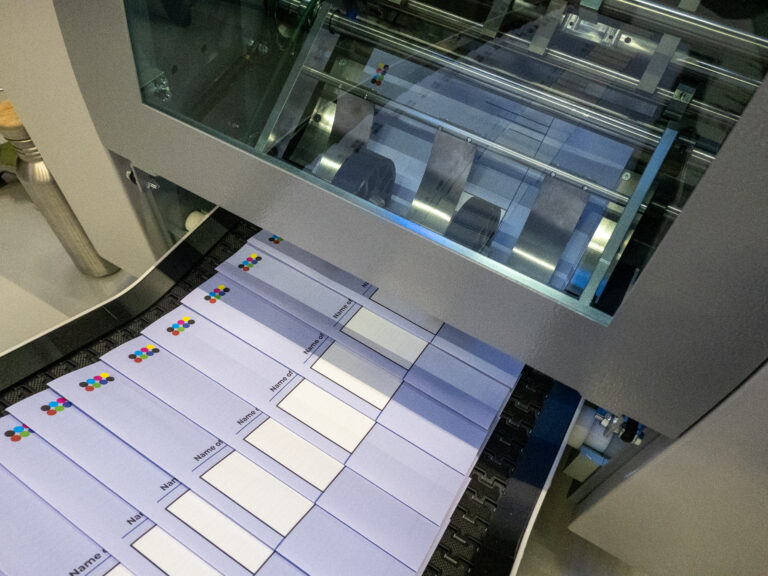
Production workflow must adapt to significantly different operational demands depending on job complexity. A ten-page booklet printed in small batches may require multiple imposition schemes, substrate changes, and finishing configurations within a short time frame. In contrast, a direct mail marketing campaign must balance consistent design reproduction, automated job tracking, and uninterrupted throughput over extended production periods.
Both scenarios rely on the same underlying print workflow, but place different demands on processing speed, data integrity, and device coordination. In such environments, workflow automation directly influences throughput measured in metres per minute (m/min) as well as downstream compatibility with inline or near-line finishing equipment base on the specific requirements of different work that can be pre-loaded and managed in digital systems for uninterrupted production.
For personalised or data-driven jobs, inkjet presses may use formats such as PDF/VT enable to enable variable data printing content to be applied from client data such as names, addresses, or previous communications. This capability becomes particularly important when managing high-volume applications such as transactional mail, where each printed piece may contain unique text or imagery. New breakthroughs are even able to dynamically generate unique design elements like personalised colour combinations or distinct visual cues to be generated dynamically during production without operator intervention to drive consumer engagement based on data-driven metrics for direct mail marketing or packaging production.
How is Workflow Implemented in production Inkjet?
Within production environments, workflow platforms such as EQUIOS integrate these standards and processes into a unified operational framework. By coordinating file processing, droplet formation, substrate transport, and finishing communication within an end-to-end printing workflow, the system ensures that decisions made during job preparation are executed accurately during production. This integration allows production data such as layout information, colour definitions, and finishing parameters to move seamlessly between upstream prepress systems and downstream finishing equipment to drive print automated with the bare minimum of manual touchpoints that invite production bottlenecks or human error that have a cascading impact on efficiency throughout all downstream processes.
As printing volumes grow and job profiles become more complex, workflow reliability and efficiency are becoming as critical as press performance. A wide overview approach to workflow management allows inkjet presses, finishing systems, and other key solutions to operate in concert to drive more predictable output, faster changeovers, and consistent results across individual jobs, work shifts, or even production sites.
Workflow is not an afterthought in digital printing, but the underlying the mechanism that allows industrial printing operations to function efficiently and profitably.